
How Much Does Storm Debris Cleanup Cost in Louisiana?
Storm debris cleanup cost depends most on how much debris there is and where it has to go. One national cost guide says storm cleanup follows its tree debris pricing, $75 to $500 depending on volume. Its full range for tree debris jobs runs $200 to $10,000, and $800 is the average. A second national guide lists fallen tree removal at $100 to $600 per tree, with hauling and disposal included.
Most published ranges build the haul-away into the price. On rural land, much of the storm debris never leaves the property. Our storm cleanup and debris removal work stays on your land, across Northeast Louisiana from our base in Rayville. When wood does have to leave, hauling is a separate line, from a hauler or from a parish roadside pickup when one runs after a storm.
The figures in this post are national market ranges from published cost guides. Every estimate we give is free and done on site.
What does storm debris cleanup cost by job?
Guides price cleanup by the trip, the truckload, the tree, the hour or the acre. Here are the published ranges side by side, with what each one covers.
| Cleanup job | Published range | What the range covers | Source |
|---|---|---|---|
| Storm cleanup, by volume of debris | $75 to $500 | Debris removal at standard tree debris rates | National guide 1 |
| Tree debris removal, whole job | $200 to $10,000, average $800 | Labor and disposal trips, set by job size | National guide 1 |
| Emergency service after a storm | $100 to $150 per hour above standard rates | Immediate service while demand surges | National guide 1 |
| Fallen tree removal | $100 to $600 per tree | Hauling and disposal included | National guide 2 |
| Brush pile removal | $150 to $200 per pickup truck load | Loading and hauling the pile | National guide 2 |
| Brush removal by the acre | $800 to $3,000 per acre, up to $5,000 with trees | Machine clearing; hauling logs and stumps costs more | National guide 2 |
| Yard debris removal | $150 to $350 per half dump truck | Loading and disposal of 2.5 to 5 cubic yards | National guide 2 |
| Tree debris hauling | $75 to $250 per dump trip | One trip to the dump | National guide 2 |
| Tree chipping | $100 to $150 per hour | Chipping on site, one hour minimum | National guide 2 |
| Tree removal | $200 to $2,000 per tree, by size | The tree itself; debris and stump work add on | National guide 3 |
| Debris removal added to a tree job | $75 to $500 | Cleaning up the tree’s debris | National guide 3 |
The spread from $200 to $10,000 comes down to job size, per the first guide. A few limbs by the drive and a tract full of downed timber are very different jobs.
Which range fits a rural tract?
Per-trip and per-tree prices fit a few trees down near a house. Storm damage across a pasture or timber edge is closer to the second guide’s per-acre range. That range covers clearing with tractors, bulldozers, excavators or commercial rotary cutters. Fees rise for hauling away large logs and stumps, and minimum fees run $250 to $600 per visit.
What do published cleanup prices include?
Most of these ranges include loading, hauling and disposing of the debris. The second guide says cleanup and removal costs typically include brush hauling and disposal. Its fallen tree range includes hauling and disposal too.
The third guide describes how a fallen tree job ends. Crews feed the branches into a wood chipper or load pieces into a truck to take offsite.
Dump fees ride along in many quotes. The second guide puts tree waste disposal at $30 to $100 per ton. Some contractors fold that fee into labor. It adds that old, mature trees require multiple dump trips.
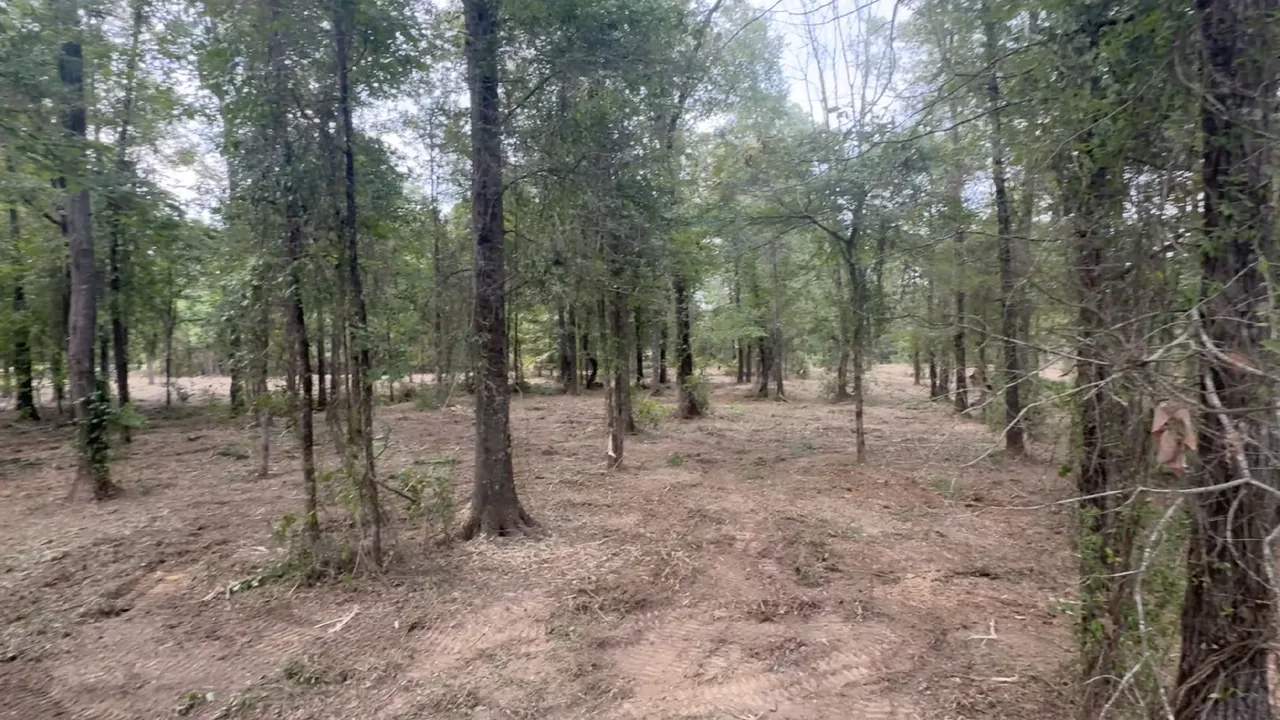
On a rural tract, most storm debris can stay on the land. We mulch tops, limbs and brush where they lie, or pile them with the grapple. A pile can be burned on site where the rules allow. A haul, when you want one, is its own line.
Can you burn storm debris instead of hauling it?
Burning a pile on site takes the place of the haul. LAC 33:III.1109.C.2 exempts trees and brush burned in parishes of 90,000 people or fewer, outside city or town limits. Other conditions come with it, so we check what applies to your parish and site before a pile is lit. Our Louisiana burn ban guide covers the rest.
What moves the price of storm debris cleanup?
How much debris there is, and how big the trees are
The first guide says debris volume and where it sits set the labor time and the number of disposal trips. Large trees need cutting into pieces before anything moves, the second guide notes. The third guide prices tree removal at $200 to $2,000, depending on size.
Access, distance and wet Delta clay
Debris stacked near a driveway costs less to remove than debris scattered across a property, the first guide says. Rural landowners may also see higher travel charges, since disposal sites sit farther away. The second guide adds that contractors typically charge extra when the dump is over an hour’s drive.
Winter storms add mud to the job. USDA says the upper part of Sharkey clay’s surface layer stays saturated from December through April in normal years. On that Delta ground, heavy cleanup can wait for drier weeks, which keeps ruts out of the pasture.
Hanging tops, trees on houses and power lines
A tree on a roof or in a power line changes the job and the price. The third guide says damage to a roof, water mains or power lines means emergency services come first. When a tree damages lines or mains, it adds, emergency services double the cost.
Hanging tops and trees on a house need a climbing tree crew first. Anything touching a line goes to the utility first. When the tree is down on open ground and the hazard is gone, the cleanup is ours.
How soon you need the work
Demand surges after a storm, and so do rates. The first guide says immediate emergency service adds $100 to $150 per hour above standard rates. The second lists after-hours tree-limb disposal at $150 to $250 per hour.
If nothing is blocked or in danger, waiting can pay. The first guide suggests waiting about a week after the storm passes, since prices often settle once the rush fades.
How do we handle storm debris on rural land?
Our storm debris cleanup runs on a compact track loader. Its grapple does the cleanup work, moving and piling trunks, limbs and brush. The forestry mulching head grinds tops and brush where they lie. The chips stay on the ground as mulch.
Old blowdown that has grown up in briars is brush clearing work. Trees that snapped leave stumps, which stump grinding takes down below the surface. Some storm jobs need a dozer or excavator crew, and we tell you when that is the case.
Can cost-share help pay for storm debris cleanup?
Two USDA Farm Service Agency programs can share the cost on farm and forest land.
- Farmland. The Emergency Conservation Program (ECP) covers removing post-disaster debris from farmland. Its practices also include grading, shaping or re-leveling land. Cost-share runs up to 75 percent of the allowable cost, and limited resource producers may get up to 90 percent.
- Private forest land. The Emergency Forest Restoration Program (EFRP) helps non-industrial private forest landowners recover from natural disasters. Those include tornadoes, windstorms and ice storms. Its practices include removing post-disaster debris and woody residue from forest land. Cost-share runs up to 75 percent of the cost of approved practices.
ECP funding depends on congressional appropriations, so the money is not guaranteed. Check with FSA on what is open for your storm before the work starts.
How do you get a storm cleanup quote you can compare?
Ask what each price covers. One quote may fold in hauling and dump fees, while another prices the cleanup alone. Line the items up side by side: cutting, piling, mulching, burning, hauling and stumps.
Bring these to the estimate:
- Where the debris lies, such as a fence line, a woods road or a timber edge.
- What you want done with the wood, whether firewood, mulch, a burn pile or a haul.
- The gate and the way in, so the loader can reach the work.
- Any tree on a house or a line, so the right crew goes in first.
Our storm cleanup page shows how we clear a tract after wind and ice damage. Call (318) 235-7597 for a free on-site estimate.