Land clearing methods compared: which one is right for your property?
For most Louisiana tracts, forestry mulching is the default. One machine grinds brush, saplings, and small-to-medium trees into mulch on the spot, leaves the soil and roots in place, and costs the least. You step up to traditional dozer or excavator clearing when the land has to end up bare and gradeable with the stumps gone, like a building pad or a pond site. Burning and hand clearing each fill a narrower role. The right pick comes down to what you want the ground to do next.
Here is how the main land clearing methods stack up for a property around Rayville and across Northeast Louisiana.
The methods at a glance
| Method | Best for | Cost per acre | Debris | Soil disturbance | Stumps |
|---|---|---|---|---|---|
| Forestry mulching | Brush, small-medium trees, wildlife and wet ground | $1,800–$4,000 | None, left as mulch | Minimal | Left in ground |
| Traditional dozer (grub-and-haul) | Building sites, full clearing, grading | $2,000–$5,000 | Hauled or burned | High | Removed |
| Excavator and grapple | Heavy timber, stump and root extraction | $2,500–$6,000 | Piled to haul or burn | Moderate to high | Removed |
| Controlled burn | Disposing of piled debris on rural tracts | $200–$800 | Ash only | Minimal | Left, charred |
| Hand clearing | Tight access, selective cuts | $3,000–$8,000+ | Hauled or chipped | Minimal | Left, selective |
Forestry mulching
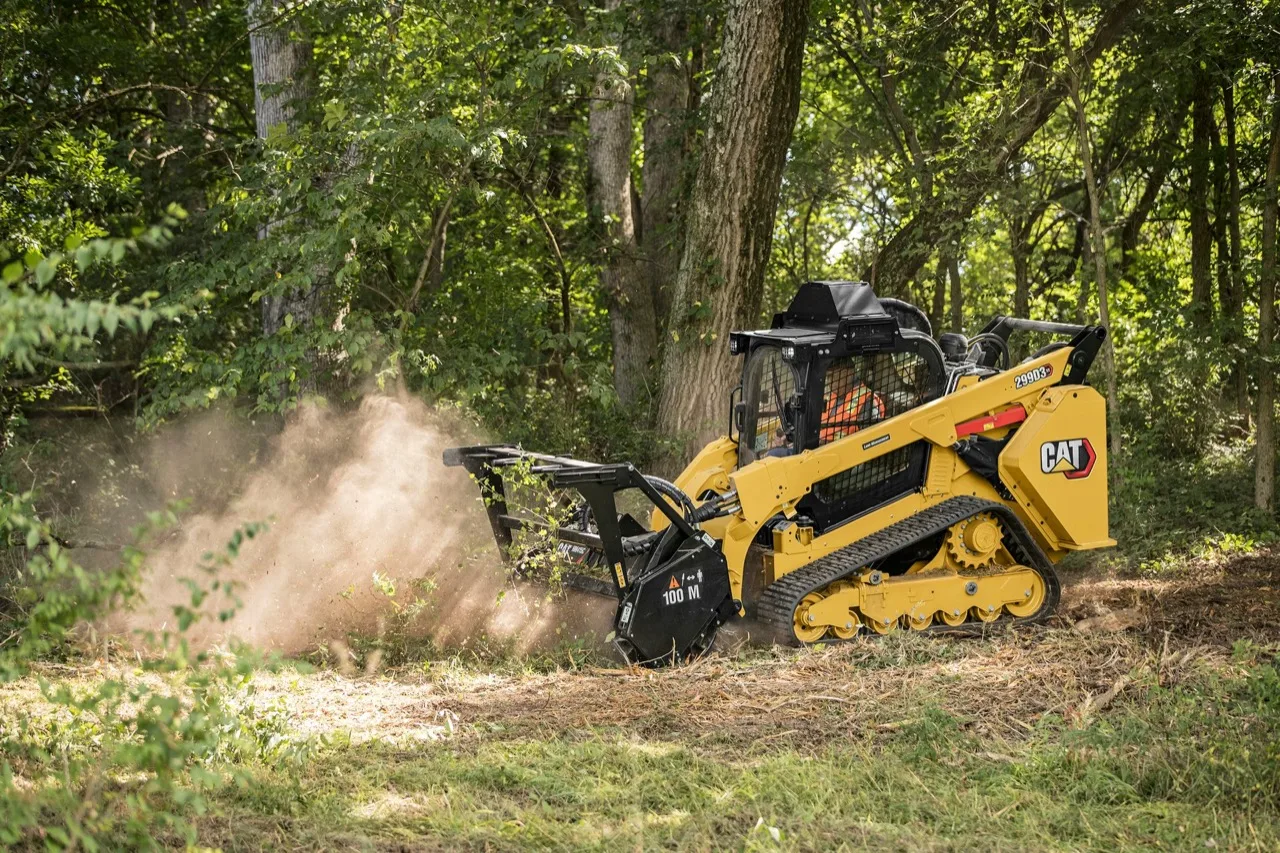
Forestry mulching is a one-step job. A tracked machine cuts and grinds standing growth into a layer of wood chips that stays on the site, so there is no separate hauling, burning, or debris pile. That is why it is the fastest and cheapest way to handle brush and small-to-medium trees, and the mulch layer it leaves behind suppresses regrowth, holds moisture, and guards against erosion.
The trade-off is that the roots and stumps stay in the ground. Mulching gives you clean, walkable, usable land, but it is not finished site prep for a foundation. Our guide on stump grinding after forestry mulching covers when those leftover stumps matter and when they never will. Its other strength is soft ground. The low-ground-pressure tracks spread the machine’s weight, so it works wet or low ground with far less rutting than a dozer, which matters a lot on Louisiana bottomland. For more on that service, see our forestry mulching page.
Traditional dozer clearing (grub and haul)
This is the method when the land has to end up open and buildable. A dozer pushes over the trees, rips out the root balls, and piles the debris to be burned or trucked off, and it can rough-grade the site in the same trip. The cost is higher because of the disposal, and it disturbs the most soil. It strips and compacts the topsoil and leaves bare ground that needs cover to hold against erosion. For a house pad, a shop site, or a pond, that disturbance is the point.
Excavator and grapple
An excavator with a grapple or root rake is the surgical option for heavy work. It pulls large individual trees, extracts stumps and roots, separates soil from debris, and handles wet or rooty ground better than a dozer blade. It still leaves a debris pile to deal with, but it gives you more control than pushing everything over. It pairs naturally with dirt work and grading when a tract needs both.
Controlled burning
A planned, permitted burn is cheap per acre and useful for getting rid of the piles a dozer leaves. It is a disposal and maintenance tool, not a way to clear a buildable lot on its own. It only consumes the vegetation, it leaves the stumps, and in Louisiana it is regulated. Open burning is restricted by default, with an exception that lets landowners in smaller parishes burn trees, brush, and vegetation as long as it is not within or next to a city or town, and the smoke is kept well away from homes and roads. Burn bans are declared separately by the state when fire conditions are high, so you check for one before you ever light a pile.
Hand clearing
A crew with chainsaws gives you the most precision and the least disturbance, which matters when you are thinning around mature oaks or working a tight or sensitive spot a machine cannot reach. It is also the slowest and most expensive per acre, so it is reserved for selective or access-limited jobs rather than open acreage.
Which method for a Louisiana tract?
Three local conditions usually decide it.
Wet gumbo and clay ground. Saturated Delta clay ruts and compacts badly under a dozer. A low-ground-pressure mulcher is far gentler, and scheduling the work for a drier stretch protects the soil even more. Louisiana ground does not freeze, so the real timing question is wet season versus dry, not waiting on frozen ground.
Creeks, wetlands, and scenic rivers. Near water, the rules tighten. Clearing a wetland can need a federal permit, and work close to a designated scenic river is limited. Because mulching leaves roots and topsoil in place, it tends to fit those limits better than grubbing. Check the rules first; our permit guide explains when they apply.
Pasture, fields, and hunting ground. Mulching is the efficient way to knock down a dense stand of brush and small trees, and on recreational land it opens the understory that holds game. For grass and lighter overgrowth, bush hogging is the right tool instead, and on hunting tracts the two go together, which we cover in clearing land for deer hunting.
If you are weighing the options against your budget, our cost-per-acre guide puts numbers to each method.
FAQ
What is the difference between forestry mulching and traditional land clearing? Forestry mulching is one method of land clearing. A single machine grinds standing brush and trees into a mulch layer that stays on the ground, with the roots and topsoil left in place. Traditional clearing usually means a dozer or excavator pushing everything over, grubbing out the root balls, and burning or hauling the debris, which leaves bare, gradeable ground. Mulching is cheaper and gentler on the soil; traditional clearing leaves you a build-ready site.
What are the downsides of forestry mulching? Mulching does not remove stumps or roots, so it is not foundation-ready, and aggressive growth like privet and briar can resprout within a couple of seasons without follow-up. It also works best on brush and trees up to roughly eight to ten inches; very large or dense hardwoods are slow to mulch, and big stumps still need a separate grinder. On a stand of merchantable timber, mulching also gives up the salvage value you could otherwise sell. For ground that is more field than forest, the cheaper question is bush hogging versus forestry mulching.
Which land clearing method is cheapest? Forestry mulching is usually the cheapest way to clear brush and small-to-medium trees, because the material is ground up on-site with nothing to haul or burn. A controlled burn can be cheaper per acre in raw dollars where conditions and Louisiana’s rules allow, but it only disposes of vegetation and leaves the stumps. Hand clearing is the most expensive per acre.
Can you clear land near a creek or wetland in Louisiana? Yes, but the rules tighten near water. Clearing a wetland can require a federal Section 404 permit, and work close to a designated scenic river is restricted. Because forestry mulching leaves the roots and soil in place, it tends to disturb less than dozer grubbing, which pulls the root structure out. Always confirm the rules first; our Louisiana permit guide covers when they apply.
What is the best time of year to clear land in Louisiana? Drier windows are easier on the ground here. Louisiana soil does not freeze, so the northern advice to wait for frozen ground does not apply. Instead, the heavy gumbo clay and wet bottomland rut and bog down equipment when saturated, so working a drier stretch protects the soil and keeps the job moving. A low-ground-pressure mulcher extends the workable season on soft ground.
Do you need to burn the debris after clearing? Not with forestry mulching, since the material is ground into a mulch layer and left on site. With dozer or excavator clearing, the debris is piled and then either hauled off or burned. If you burn in Louisiana, open burning is regulated, so you have to follow the state’s rules on what, where, and when, and check for any active burn ban first.
Not sure which method your land needs?
That is what a site visit is for. Big Cypress Land & Game clears land across Rayville, Monroe, and Northeast Louisiana with the method that fits the job, not just the one machine on the trailer. Tell us what you want the ground to do, and we will recommend the approach and put a free estimate in your hands.