
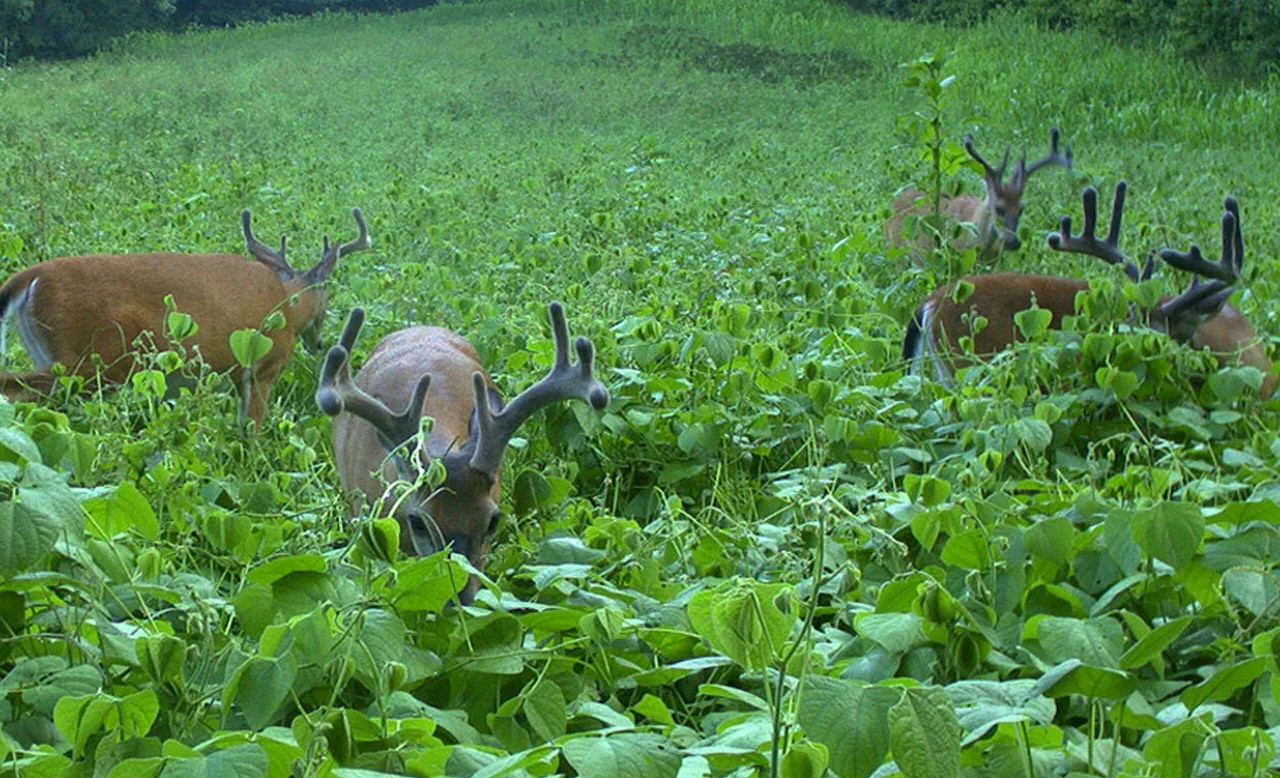
How do you clear and improve land for deer hunting in Louisiana?
Clearing for deer hunting works best as selective opening, not wholesale clearing. You forestry-mulch or thin the dense understory so sunlight reaches the ground and triggers new browse, while you deliberately leave the mast-producing oaks that make Louisiana bottomland such good deer ground. The same machine cuts shooting lanes, access trails, and one-acre to two-acre openings for food plots in a single pass. Then you soil-test, lime, prep, and plant the openings for the season.
Owner Mike Martien has improved his own ground and guided landowners across the South, so at Big Cypress we plan this work the way a hunter would. Here is how clearing and land improvement turns an overgrown tract into property that holds and grows better game.
Open the understory, keep the mast
The mistake is clearing too much. A whitetail herd lives on cover and hard mast, so the worst thing you can do is strip a bottomland stand down to bare ground. The better move is to open the choked understory while keeping the trees that feed deer.
On most Northeast Louisiana tracts that means grinding out the privet, briar, and low-value saplings under the canopy, and “daylighting” the good water oaks and willow oaks by cutting the junk crowding them. Opening the canopy lets light hit the forest floor, which flushes the low browse and forage that deer actually eat. Forestry mulching is the right tool for this selective work, because it grinds the understory in place and leaves a mulch layer without tearing up the soil or taking the mast trees.
The steps to a huntable food plot
Once you pick the spot, a food plot follows a simple order. Skip a step and you waste seed.
- Clear and open the ground. Mulch or spray and mow the existing brush, pull the low-value saplings, and open the shooting lanes and an access trail to the plot at the same time.
- Soil test first. Pull five to ten cores a few inches deep, mix them into one sample, and send it to your parish LSU AgCenter office. The test is cheap and it tells you exactly what the ground needs.
- Lime to correct pH. Most plot species want a pH around 6 to 7. Low pH locks up your fertilizer and wastes money. Apply the lime the test calls for and disk it in, ideally a few months ahead since lime is slow to work.
- Prep the seedbed. Kill the existing weeds, apply lime and fertilizer per the test, and disk to a firm, clean bed.
- Plant for the season. Cool-season plots go in around early fall; warm-season plots go in around late spring. Broadcast or drill at the recommended rate and follow a rain for good seed-to-soil contact.
- Maintain it. Mow and spray weeds, top-dress fertilizer as the test directs, and re-test every year or two. Grow small plots toward an acre or two so deer do not wipe them out by early winter.
Plot size and what the ground will hold
| Item | Guidance |
|---|---|
| Soil pH target | About 6 to 7 for most plot species |
| Plot acreage, attraction | Roughly 2 to 3 percent of the property in plots |
| Plot acreage, herd nutrition | Roughly 5 to 8 percent of the property in plots |
| Deer per acre of plot | A rule of thumb is about three deer per quality year-round acre |
| Cool-season planting | Oats, wheat, cereal rye, and clovers, planted in fall |
| Warm-season planting | Cowpeas, soybeans, and American jointvetch, planted in late spring |
These are general guides, not guarantees. Carrying capacity on fertile Delta bottomland is genuinely higher than on poor upland soils, so treat the deer-per-acre number as a starting point and let your own herd and habitat tell you more.
What works on Louisiana bottomland
Northeast Louisiana holds some of the best deer ground in the state. State wildlife managers rank bottomland hardwood among the most productive habitat there is, and the richest harvests come from the hardwood bottoms along the Mississippi and Red rivers, where deep alluvial soils, heavy acorn mast, and nearby farm fields stack food in one place.
That fertility comes with an agronomic catch. The soils are heavy gumbo and clay, often wet and acidic, so the forage that thrives is the forage that tolerates that ground. American jointvetch handles wet, acidic clay and shade and shows up heavily in summer deer diets, and cowpeas grow on poor soil, which is why both earn a place in a Louisiana warm-season mix. Plant off a soil test, not a guess.
The same wet bottomland is prime for the Mississippi Flyway. If your tract holds water, a greentree reservoir, where you levee a stand of bottomland hardwoods and flood it in late fall after the oaks go dormant, turns deer ground into duck ground too. Clearing, trail and access work, and water management all fit together on a property managed for both.
Make the most of the help that is out there
Improving habitat on private land can qualify for federal cost-share. The Natural Resources Conservation Service runs programs that reimburse a share of the cost of practices like forestry work and food plots on private ground, often a large share for the qualifying landowner. Programs and rates change year to year, so the move is to talk to your local NRCS field office before the work, and Mike’s experience with those programs helps line the plan up with what they fund.
For the clearing side of the budget, our cost-per-acre guide covers what opening the ground runs, and our methods guide explains why mulching usually beats a dozer on hunting land. To keep plots and lanes open year to year, bush hogging is the maintenance tool.
FAQ
How do you clear land for a food plot? Open the spot with forestry mulching or by spraying and mowing the existing brush, taking out low-value saplings while leaving the mast-producing oaks. Then pull a soil test, apply the lime and fertilizer it calls for, and disk to a firm, clean seedbed before seeding. The usual order is spray, clear, lime and fertilize, disk, plant, then pack the seed in. Mulching is popular because it opens an acre or two quickly and leaves a workable surface.
How many deer will a one-acre food plot support? A common rule of thumb is that an acre of quality, year-round plots feeds roughly three deer, but it varies a lot with herd density, soil, and the food around it. What matters more is total plot acreage relative to your property: somewhere around two to three percent of the tract in plots for attraction, or five to eight percent for real herd nutrition. On fertile Delta bottomland the ground carries more than poor soil does.
What is the best poor man’s food plot for deer? The cheapest plot that actually works is a no-till throw-and-grow. Kill the existing growth, rake off the dead material, then broadcast cereal grains like rye, wheat, or oats mixed with clover right before a rain. Clover is the most forgiving choice for unknown soil and shady woods edges, and cereal grains give fast cool-season browse for hunting season. A cheap soil test and a little lime still pay off.
How much does a one-acre food plot cost? Budget roughly $150 to $325 per acre for materials on a typical plot, with lime being the swing factor. Seed for a cool-season clover-and-grain mix runs about $50 to $70 an acre, lime anywhere from $20 to $100 depending on type and how much the soil needs, and starter fertilizer another $100 or so. A bare-bones throw-and-grow plot can be done for $20 to $50 an acre. Clearing and disking are separate.
What should you plant in a food plot in Louisiana? Lean on forage that handles acidic, wet, heavy ground. For cool-season plots planted in fall, oats, wheat, cereal rye, and clovers do well across Louisiana. For warm-season plots planted in late spring, cowpeas, soybeans, and American jointvetch hold up, and jointvetch in particular tolerates the wet, acidic clay common on Delta bottomland. Always plant off a soil test rather than guessing.
Should you clear cut or selectively clear hunting land? Selective is almost always better for deer. Wholesale clearing strips the cover and the mast trees that hold a herd. The goal is to open the dense understory so sunlight reaches the ground and triggers new browse, while leaving the water oaks, willow oaks, and other mast producers that feed deer in fall. Forestry mulching is well suited to that selective opening, plus cutting shooting lanes and access trails in the same pass.
Build a property that holds deer
Good hunting ground is made, not found. Big Cypress Land & Game clears, opens, and improves hunting land across Rayville, Monroe, and Northeast Louisiana, from shooting lanes and food-plot openings to trails, water, and full wildlife habitat work. Tell us what you want your property to do in November, and we will lay out a plan and a free on-site estimate.