
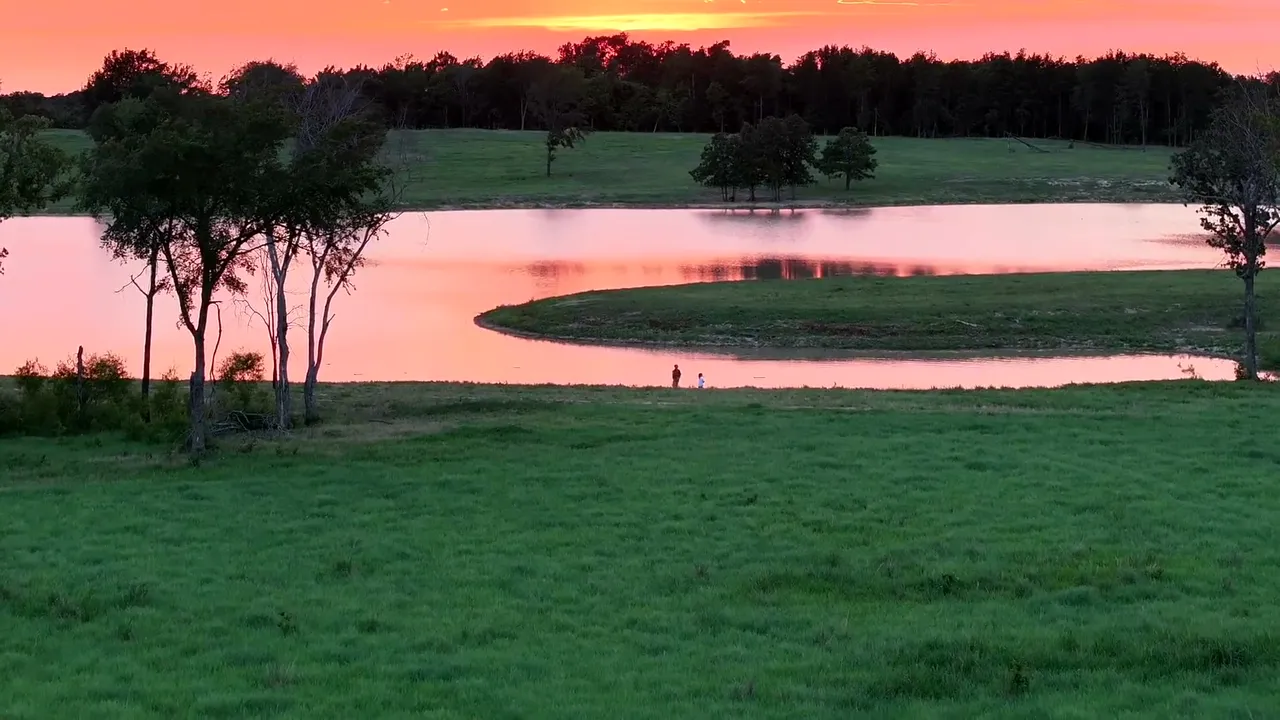
How Much Does It Cost to Build a Pond in Louisiana?
A national cost guide dated January 2026 lists a farm pond at $3,000 to $23,000. By size, its ranges run $1,800 to $8,100 for a quarter acre and $3,000 to $15,000 for one acre. Digging a large pond runs $1.50 to $4.00 per cubic yard in the same guide.
Most of that money pays for moving dirt. An Alabama extension guide names the amount of earthmoving as the largest single factor in pond construction cost. It calls costs like pipe and seeding often only incidental next to the earthmoving.
Those figures are national market ranges. We plan and prepare pond construction sites across Northeast Louisiana from Rayville. Each estimate is free and done on site. Our pond site work runs on a compact track loader. Some pond jobs need a dozer or excavator crew, and we tell you when that is the case.
What does a pond cost by size?
Guides price ponds by the size of the pond or by the cubic yard of dirt moved. Here are the published ranges in one place.
| Pond size or job | Published range | Source |
|---|---|---|
| Quarter acre pond | $1,800 to $8,100 | National cost guide |
| Half acre pond | $2,400 to $11,600 | National cost guide |
| One acre pond | $3,000 to $15,000 | National cost guide |
| Two acre pond | $6,000 to $30,000 | National cost guide |
| Ponds over 10 acres, per acre | $1,200 to $6,800 | National cost guide |
| Farm pond, typical job | $3,000 to $23,000 | National cost guide |
| Fishing pond, typical job | $7,000 to $59,000 | National cost guide |
| Digging a large pond, per cubic yard | $1.50 to $4.00 | National cost guide |
| Cleaning out an old pond, per cubic yard of silt | $20 to $60 | A second national cost guide |
Per acre, small ponds cost more than big ones. The first guide says smaller lakes cost more per acre due to the equipment and material transportation costs. The Alabama extension guide says the same of small ponds.
How is pond digging priced?
NRCS says the dirt volume estimate sets the cost of a dug pond and is a basis for bids. At the guide’s large pond rate, every 1,000 cubic yards comes to $1,500 to $4,000.
What moves the cost of a pond in Northeast Louisiana?
Soil that holds water
NRCS says clays and silty clays are excellent for holding pond water. Soil with enough clay, at least 3 feet thick, generally seeps little where water is under 10 feet deep. Coarse sand does not hold water well.
USDA describes Sharkey clay on the Mississippi River flood plain as very slowly permeable. Clay makes up 60 to about 90 percent of its layer from 10 to 40 inches deep.
In Richland Parish, waxy clay runs along Bayou Lafourche. The Macon Ridge soils in the east half of the parish are mainly silt loams.
Where a pond bottom will not hold, imported clay or bentonite can sometimes seal it. The Alabama guide warns that sealing pond bottoms can be very expensive.
Clay has a catch of its own. Sharkey cracks as it dries, and in most years the cracks reach 20 to 24 inches deep or more. NRCS warns that soggy clay in a dam’s cutoff may crack as it dries.
The watershed that feeds it
A pond fed by runoff needs enough land draining into it. The Alabama guide says a pasture watershed with heavy clay may need only 5 acres per surface acre of water. A sandy, wooded watershed may need 30 acres or more.
Too little runoff leaves a shallow pond. The guide ties an average depth under 3 feet to weed problems and possible fish kills. Too much runoff calls for expensive overflow structures, and the pond tends to silt in fast.
A dug pond or a dam pond?
On sloped ground, a small earthen dam stores the water above ground. The Alabama guide calls that embankment pond generally the least expensive type per surface acre. It calls dug ponds the most expensive per volume of water stored.
Delta ground is flat. USDA says Sharkey slope is dominantly less than 1 percent. NRCS calls dug ponds the simplest to build on flat ground. Their size is limited, though, since almost all the storage comes from digging.
The dam and the overflow pipe
A dam pond needs a packed clay core over a cutoff trench dug at least 12 inches into tight soil. The Alabama guide’s equipment list includes a bulldozer, a self-loading scraper, a backhoe and a sheepsfoot or tamping roller. The dam goes up in thin layers of 6 to 8 inches.
Building the dam is work for a dozer and roller crew. When your pond needs that crew, we say so at the estimate.
The overflow pipe through the dam, called the principal spillway, handles runoff from smaller storms. A grassed emergency spillway carries big storms around the dam. The guide says it can be 10 to 50 feet wide or wider. It also says the fill around that pipe is often the weakest part, and where the majority of dams fail. Grass cover on the dam and banks comes last, and the guide calls it one of the most important steps.
Clearing the site first
The dam site and the pool have to be cleared first. The Alabama guide says stumps and roots should never be buried under the dam. One national guide puts land clearing at $1,200 to $8,000 per acre for a lightly wooded lot. Heavy woods run $7,000 or more per acre.
Clearing the pond site is part of our land clearing and reclamation work. Our land clearing cost per acre guide has published prices.
Access and the spoil pile
One guide says labor costs more when trucks and big machines have a hard time reaching the pond site. We can clear a lane in for the machines as part of the site work.
NRCS says dug dirt can stay on the site or be removed. Complete removal is expensive, the handbook adds, and can seldom be justified unless the dirt is needed nearby. One guide prices dirt removal at $140 to $230 per cubic yard.
Kept on site, spoil can fill nearby low spots in a field or build farm roads, per NRCS. Spreading and shaping spoil is track loader work we do as part of site preparation and dirt work.
What permits usually apply to a new pond?
What usually applies depends on where the pond sits and how much ground the job opens up. NRCS notes that most states have rules for ponds, and the owner is responsible for permits.
- Before the first dig. Louisiana 811 must get notice at least 48 hours before mechanized digging, not counting weekends and holidays.
- Water and wet ground. Putting dredged or fill material into waters of the United States takes a Section 404 permit first. Exempt work is the exception.
- Farm and stock ponds. EPA’s list of Section 404 exemptions includes building and maintaining farm or stock ponds. The exemption has conditions, so each site gets checked.
- Farm program land. The Alabama guide says Swampbuster rules of the Food Security Act may apply where wetlands are present.
- A big footprint. Sites that open up one acre up to less than five acres fall under LDEQ’s small construction stormwater general permit.
Before work starts, we check which of these fit your land. Our Louisiana land clearing permit guide has more on the wetland rules.
How long does it take to build a pond?
One national guide says building a pond takes 1 day to a month or more. Pond size, crew size, design and the digging equipment all move that number.
On Delta clay, weather sets the calendar. USDA notes that Sharkey’s upper surface layer stays saturated from December through April in normal years. That points dirt work on that ground toward the months after April.
What does it cost to clean out an old pond?
One national guide says most ponds need dredging every five to 15 years. Its 2026 national average for pond dredging is $15,000, and typical jobs run $7,000 to $30,000.
By the yard, cleanouts run $20 to $60 per cubic yard of silt removed. By size, the guide lists $7,000 to $18,000 for a half acre and $15,000 to $30,000 for one acre. Disposal adds $500 to $5,000, and bringing the machines in can add $1,000 to $3,000 or more.
In that guide, excavators or backhoes handle large ponds machines can reach, and pumps handle deep or remote ones. Our part of a cleanout is the ground around the water. We clear the grown-up banks, and we spread and shape the spoil. When the silt itself needs an excavator crew, we tell you at the estimate.
How do you get a pond quote you can compare?
The Alabama guide suggests unit prices and agreed costs for every item in the job. A lump sum is fine unless changes come up, since changes are hard to price. Hourly work can get expensive, because the owner has no control over the hours.
Have these ready for the estimate:
- What the pond is for, such as fishing or stock water.
- The land that drains to it, and where water stands after a hard rain.
- The gate and the path in, so the machines can reach the site.
- Where the spoil can go on the property.
We fly the site with a drone to lay out the pond and see how the land drains. That is part of our drone mapping and aerial imagery work. A pond on hunting land also pairs with wildlife habitat improvement.
For a pond on your land in Northeast Louisiana, read how we plan a pond site. Then call (318) 235-7597 to set up a free on-site estimate.